


15 AI Search Visibility Platforms Compared (2026)
Compare 15 AI search visibility platforms by pricing, engine coverage, free plans, and ideal use case. See verified 2026 figures in this buyer’s matrix.
21 min read
I ran every free AI visibility checker worth using and screenshotted each one: what it asks for, which engines it queries, what the report actually shows, and where it stops.
Your Google ranking no longer decides whether you show up when a customer asks ChatGPT, Perplexity or Gemini for a recommendation. You can rank first and still be invisible inside the answer. The first step to fixing that is measurement, and you do not have to pay for a baseline: a free AI visibility checker will tell you today whether the engines name your brand.
I put the same brand and the same buyer question through every free checker worth using, screenshotted each one, and recorded field by field what each report hands back. Prices and free tiers were verified in September 2026, which matters more than it sounds: two tools on last year’s version of this list no longer have a free plan, and one no longer exists.
| Checker | Input | Signup | Engines queried | Data you get back |
|---|---|---|---|---|
| Am I Cited Brand Visibility Report | Domain | Free account | ChatGPT, Gemini, Perplexity, DeepSeek | Visibility score, share of voice across models, sentiment per mention, competitors named instead of you, model-by-model breakdown |
| rank.ai Free Checker | One prompt + domain | None | ChatGPT, Claude, Gemini | Mention yes/no and citation yes/no per engine, for the single prompt you wrote |
| Ahrefs AI Visibility Checker | Brand name | None | ChatGPT, Gemini, Perplexity, Copilot, AI Overviews | Total mentions, mentions per platform, topics that trigger them, domains cited alongside you |
| Semrush Free AI Visibility Tool | Domain | None, 3/day | ChatGPT, Gemini, AI Mode, AI Overviews | Visibility score, mentions, citations, your top-cited pages, topics, estimated audience reached |
| HubSpot AI Search Grader | Brand, product, industry, location | None | ChatGPT, Perplexity, Gemini | Perception grade across five dimensions, plus a written interpretation |
| LLMrefs | Brand or keyword | Free account, no card | ChatGPT, AI Overviews, Perplexity | Keyword-style rankings, citations, competitor benchmarking |
| Knowatoa | Domain | Check free, then paid | ChatGPT-led | Recent AI responses and which of them named you |
| Rankscale | Domain | Account | 17+ engines | Mentions, rankings, citations, sentiment, plus a technical page audit |
“AI visibility” is two separate things, and most tools only measure one.
Brand-mention visibility asks whether AI cites or recommends you when it answers a relevant question. If someone asks for the best project management software and your tool is not named, your mention visibility for that query is zero. This is what almost every checker on this page measures.
Technical-readiness visibility asks whether AI crawlers can access and parse your site in the first place. If your robots.txt blocks GPTBot, or your content only exists after client-side rendering, no amount of authority helps.
One more distinction to hold onto while reading any report: a mention means the model named you, a citation means one of your pages was used as a source and linked. Citations are the half you can influence directly with content, and only two tools on this page show them mapped to your own URLs.

The free AI Brand Visibility Report scores your site across ChatGPT, Gemini, Perplexity and DeepSeek in about a minute. Read the rest of this page with your own numbers in hand.
One brand, one question, every tool, in September 2026. I used Notion as the test subject and “best note taking app for teams” as the buyer question, so the outputs below are comparable rather than eight different brands measured eight different ways.
What I could and could not do is worth stating, because no other roundup does:
One lesson from the first run, before any tool: I entered notion.so, Notion’s legacy domain, and all three engines came back with zero. Switching to notion.com changed the result immediately. Enter the wrong domain and a checker hands you a false negative that looks exactly like an AI visibility problem.
Every checker returns some subset of the same eight fields. Knowing which subset you are getting is the whole basis for choosing one.
| Data in the report | Am I Cited | rank.ai | Ahrefs | Semrush | HubSpot |
|---|---|---|---|---|---|
| Composite score | yes | no | no | yes | yes, out of 100 |
| Mention count | yes | yes | yes | yes | scored, not counted |
| Citation count | yes | yes | no | yes | no |
| Which of your URLs got cited | no | no | no | yes | no |
| Position in the answer | no | yes | no | no | no |
| Per-engine breakdown | yes | yes | yes | yes | yes |
| Sentiment | yes | no | no | no | yes |
| Share of voice | yes | no | no | no | yes |
| Competitors named | yes | no | cited domains | no | yes |
| Topics triggering mentions | no | no | yes | yes | no |
| The raw answer text | no | yes | no | no | no |
Two things fall out of that table. No free checker gives you everything, and the two fields that change what you do next, your own cited URLs and the raw answer text, come from different tools. That is the real argument for running two or three rather than picking a favourite.
Get the latest insights on AI mentions, brand monitoring, and optimization strategies.
I work on this one, so discount the enthusiasm and read the fields. It leads the list for a measurable reason: it is the only free checker here that returns a score, sentiment, share of voice and the competitor set from a single submission, and the only one that queries four engines including DeepSeek.
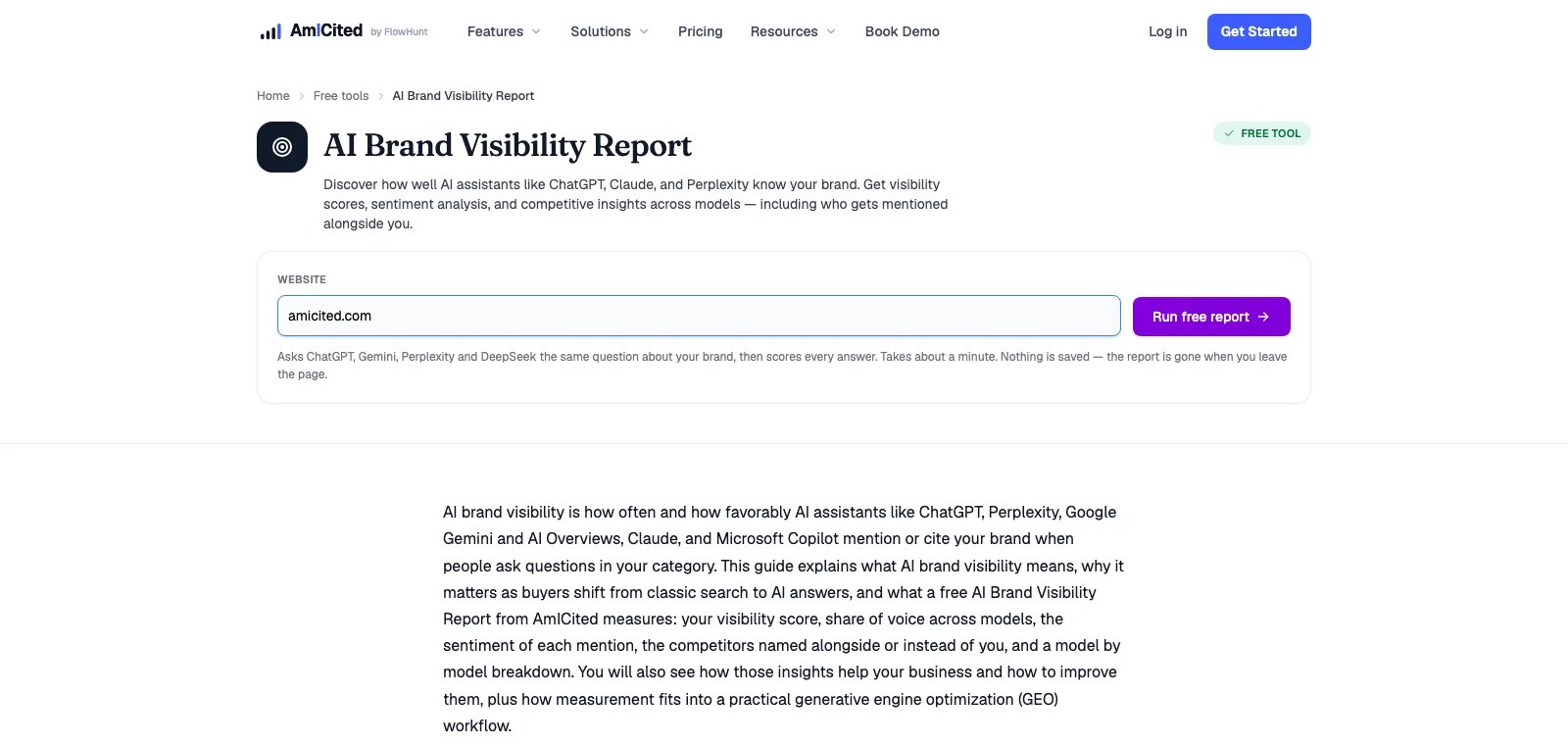
What the report contains: a visibility score, your share of voice across models, the sentiment of each individual mention, the competitors named alongside or instead of you, and a model-by-model breakdown. It puts the same question about your brand to ChatGPT, Gemini, Perplexity and DeepSeek and scores every answer, in about a minute.
Look at the field matrix above and the reason for the placement is the two columns nothing else combines. Ahrefs and Semrush count mentions but tell you nothing about tone. HubSpot reads sentiment but never shows a citation. This report is the only free one that answers “am I named, how often, in what tone, and who is named instead of me” in one pass.
Where it stops: two things, both of which count against it on this list. It needs a free account, where Ahrefs, HubSpot and rank.ai return results to anyone. And nothing is stored: the report is gone when you leave the page, which makes it a snapshot in the strictest sense on this page. If you want the same four engines tracked over time rather than once, that is the paid product, and this page is not the place to argue for it.
Best for: your single most complete free read, and the only free look at DeepSeek coverage on this list.
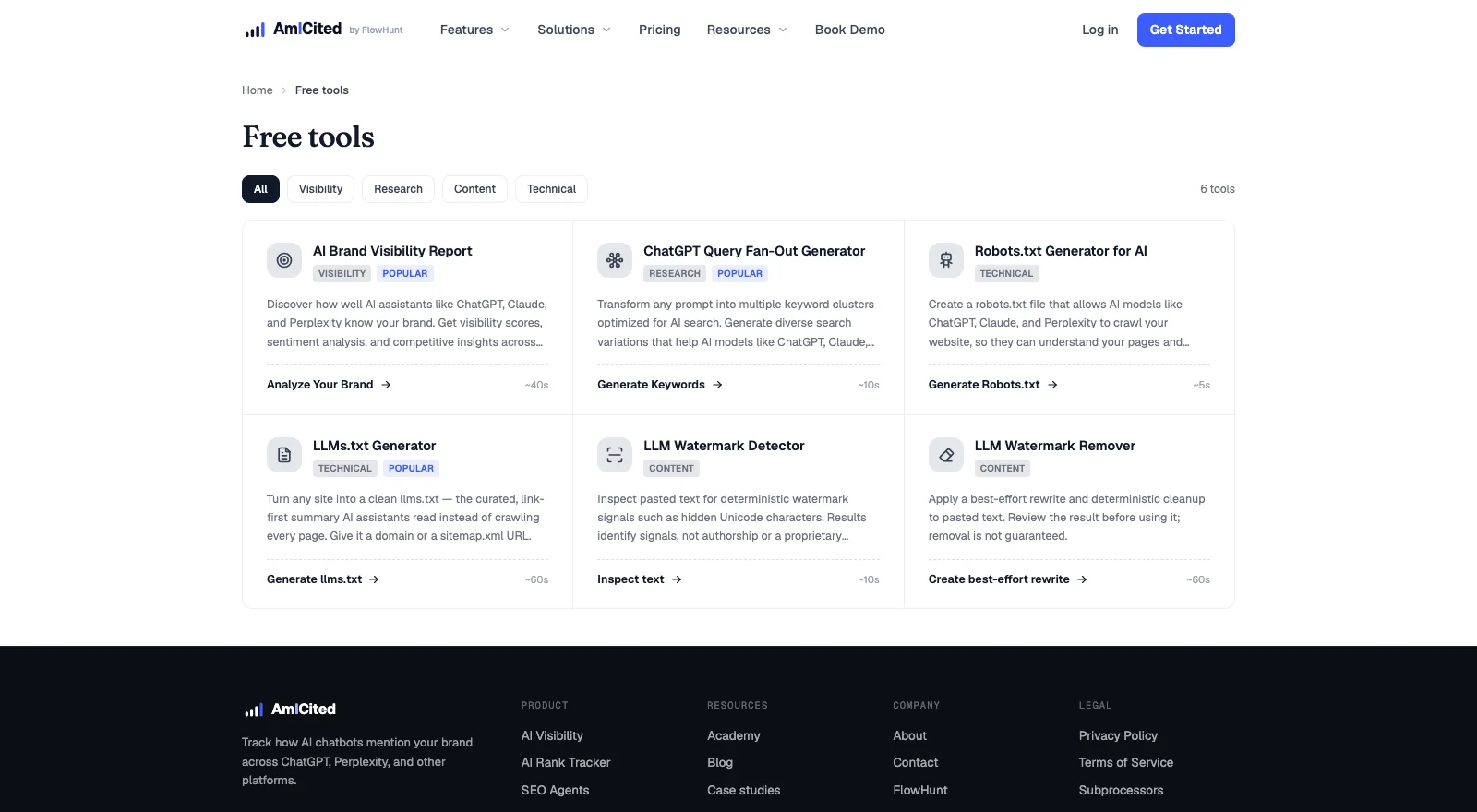
The same hub holds the two technical utilities referenced later on this page: a robots.txt generator for AI crawlers and an llms.txt generator.
Enter your website and get the visibility score, per-mention sentiment, share of voice and the competitors named instead of you, across ChatGPT, Gemini, Perplexity and DeepSeek. About a minute, free.
The only tool on this list that ran start to finish without a human check, and the only one that lets you supply the prompt.
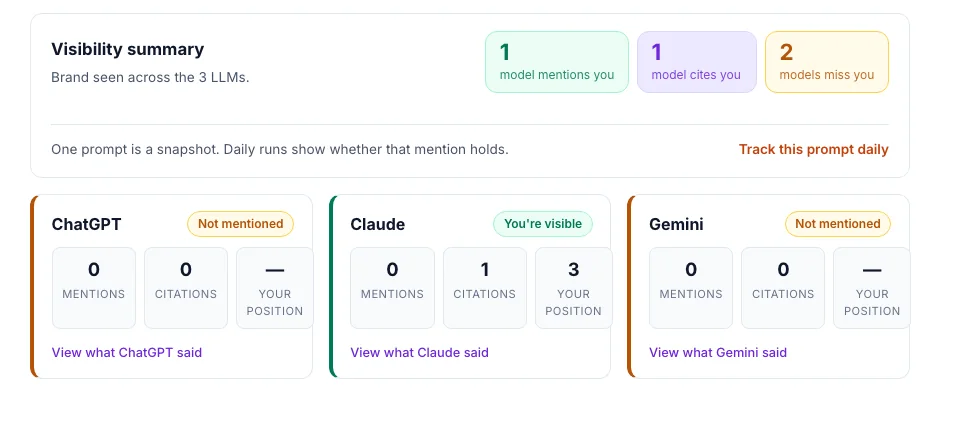
What the report contains. A summary line across the three models (how many mention you, how many cite you, how many miss you), then one card per engine carrying a status badge, a mention count, a citation count, your position in the answer, and a “View what ChatGPT said” link that opens the raw answer text.
What I got. Asked “best note taking app for teams”, only one of the three assistants named Notion. Claude cited notion.com at position 3. ChatGPT and Gemini did not mention it at all. That spread, on a category-defining brand, is the clearest argument on this page for why a single-engine check misleads you.
Where it stops: one prompt per run, no history, no sentiment. Best for: testing the exact question you believe your buyers ask, and seeing the answer text itself rather than a score derived from it.
The fastest read available, and the widest engine coverage of the no-account tools.
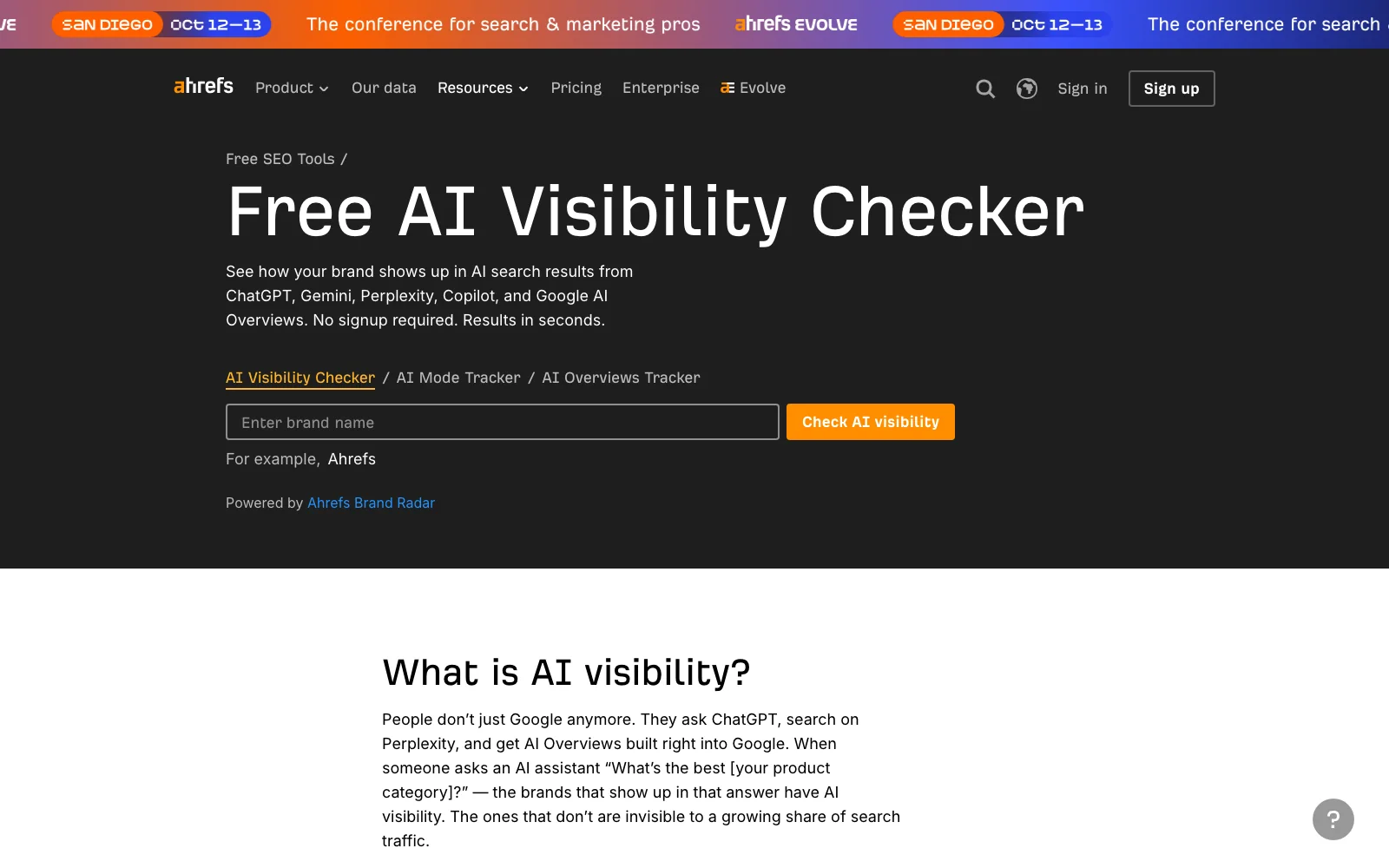
What the report contains, in Ahrefs’ own terms: total AI mentions across the prompts tested, mentions by AI platform, the top 5 topics that trigger mentions, the top 5 cited domains appearing alongside your brand, and the top 5 cited pages. Prompts are search-backed, meaning derived from real search demand rather than generated.
What I hit. Submitting a brand raised a Cloudflare “Verify you are human” check, so the run cannot be scripted. A person gets results in seconds.
Where it stops: no sentiment, no history, their prompts rather than yours. Best for: your first check ever, and for reading your competitive neighbourhood off the cited-domains list. It is the free face of the paid Brand Radar product.
The most useful free checker for anyone who works on the site itself.
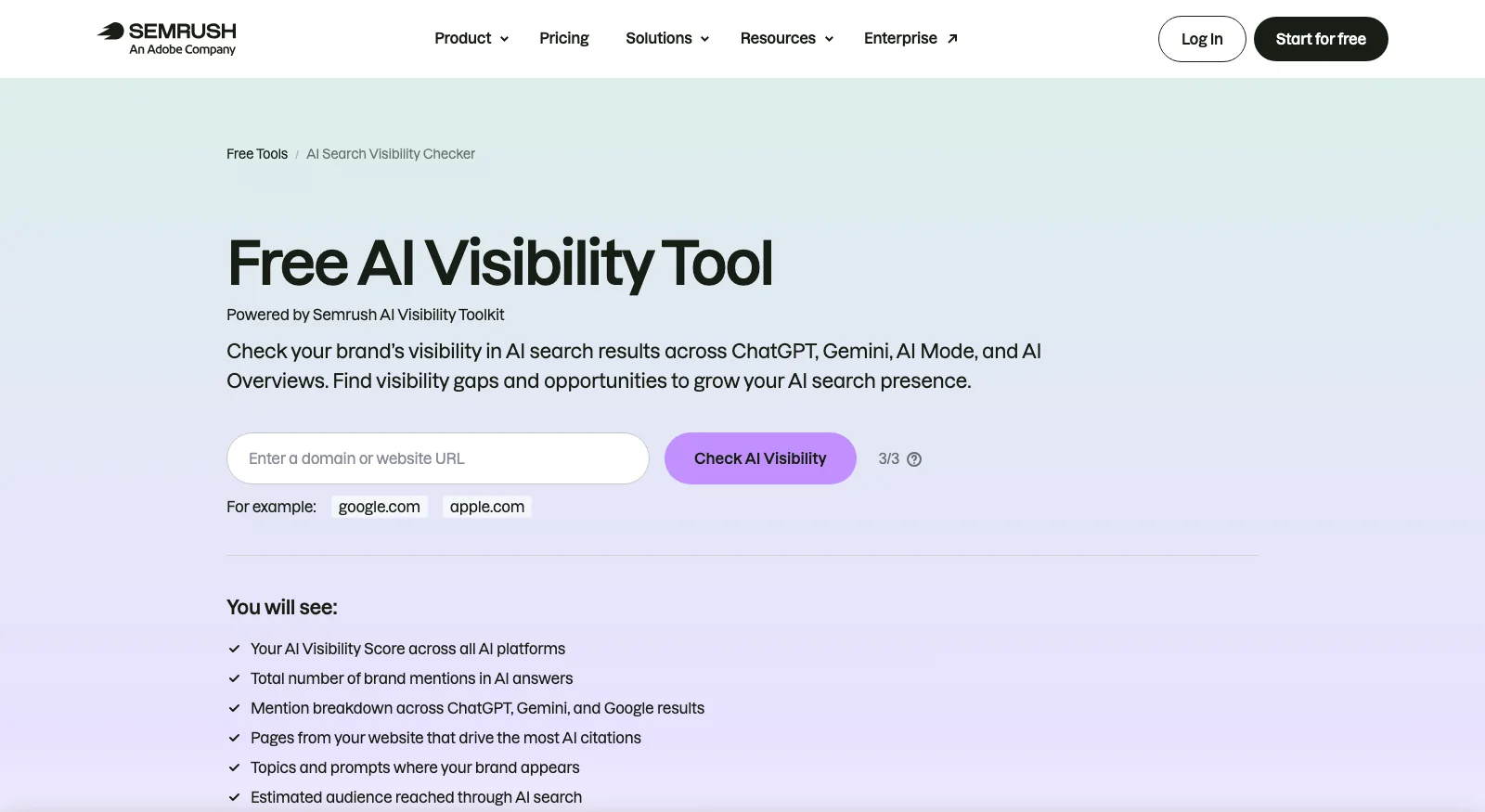
What the report contains, per the tool’s own “You will see” list: an AI Visibility Score across all AI platforms, total brand mentions in AI answers, a mention breakdown across ChatGPT, Gemini and Google results, the pages from your website that drive the most AI citations, the topics and prompts where your brand appears, and an estimated audience reached through AI search. It draws on a database of 26M+ prompts.
What I hit. A reCAPTCHA sits on the page, and free use is capped at three checks a day.
Where it stops: single run, no tracking between runs. Best for: the cited-pages list. It is the only free tool that tells you which of your URLs the engines already trust, which is the best content brief you will get for nothing. It is the free view of the paid AI Visibility Toolkit.
Not a counter at all. The AI Search Grader grades how AI describes you, and it is the most precisely specified scoring model of anything here.
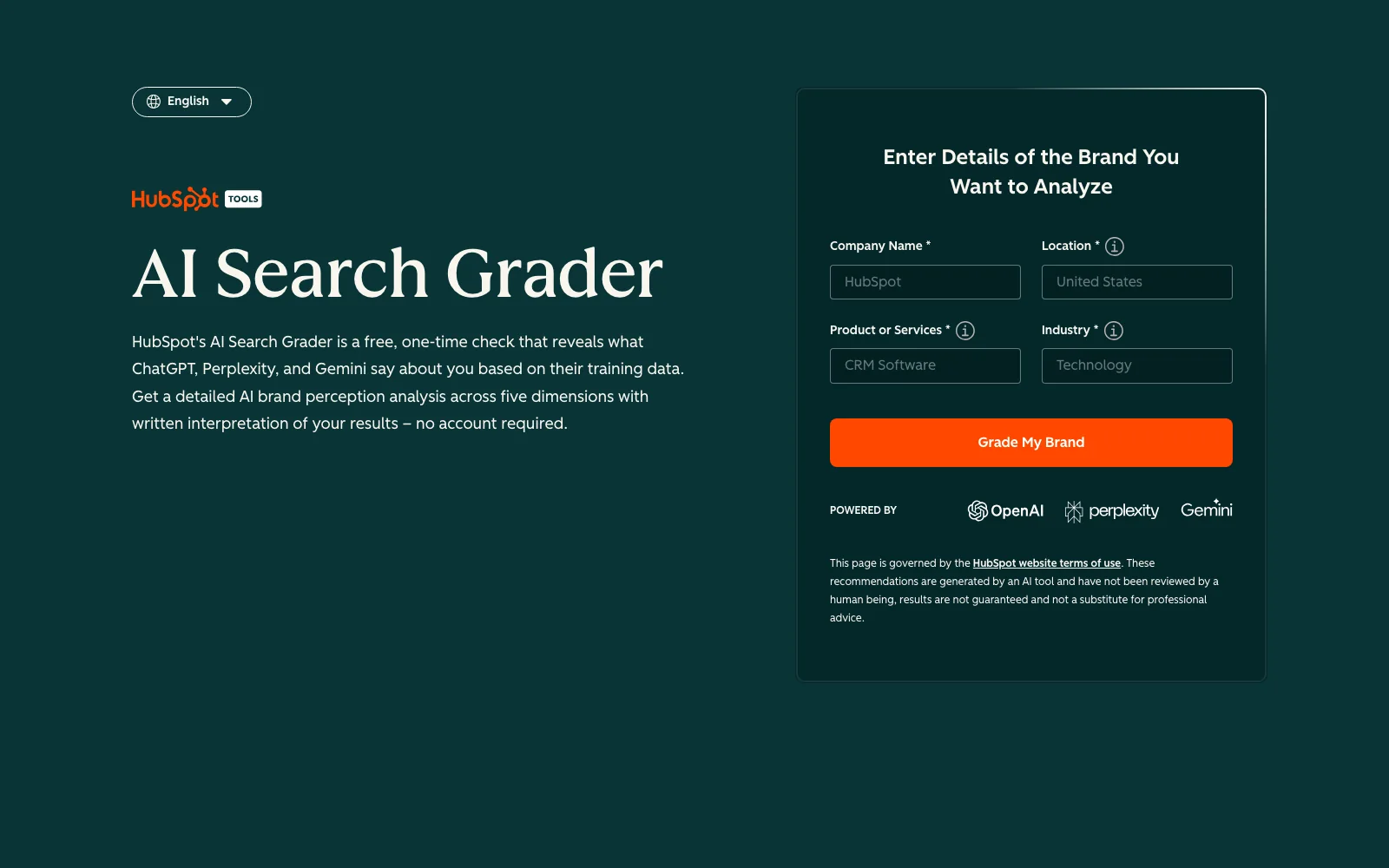
What the report contains: a composite score out of 100, built from five weighted dimensions, plus a written interpretation of what the numbers mean.
| Dimension | Points | What it measures |
|---|---|---|
| Sentiment | 40 | Overall tone, contextual sentiment by topic, and sentiment of the sources shaping it |
| Presence quality | 20 | Mention depth, source authority, and data richness in training data |
| Brand recognition | 20 | How widely and specifically your brand is known across training data |
| Share of voice | 10 | Your estimated percentage of category voice, plus a rank bonus |
| Market competition | 10 | Category role (Leader, Challenger, Niche Player) and innovation perception |
Where it stops: no citations, no URLs, no topic list, no repeat runs, and it reads training data rather than live retrieval. Best for: a quarterly brand-health read, and for showing a leadership team how the engines characterise you rather than how often.
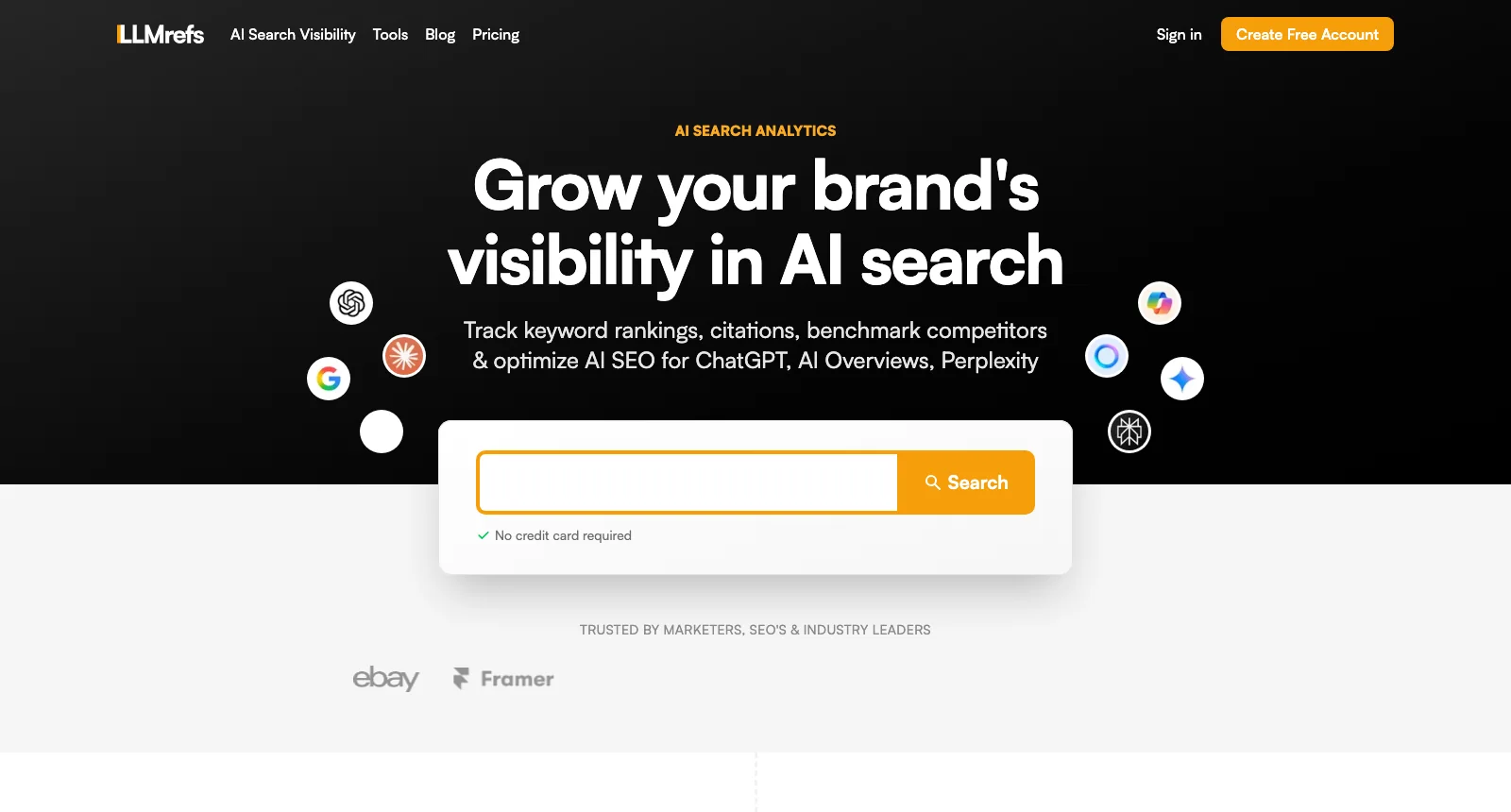
What the report contains: keyword-style analytics across ChatGPT, AI Overviews and Perplexity: rankings for the terms you track, the citations behind them, and competitor benchmarking, presented the way an SEO already thinks about a rank tracker. Free account, no card.
Where it stops: free-tier volume limits, and you work in their prompt model rather than yours. Best for: SEOs who want AI data in a familiar shape and intend to come back regularly.
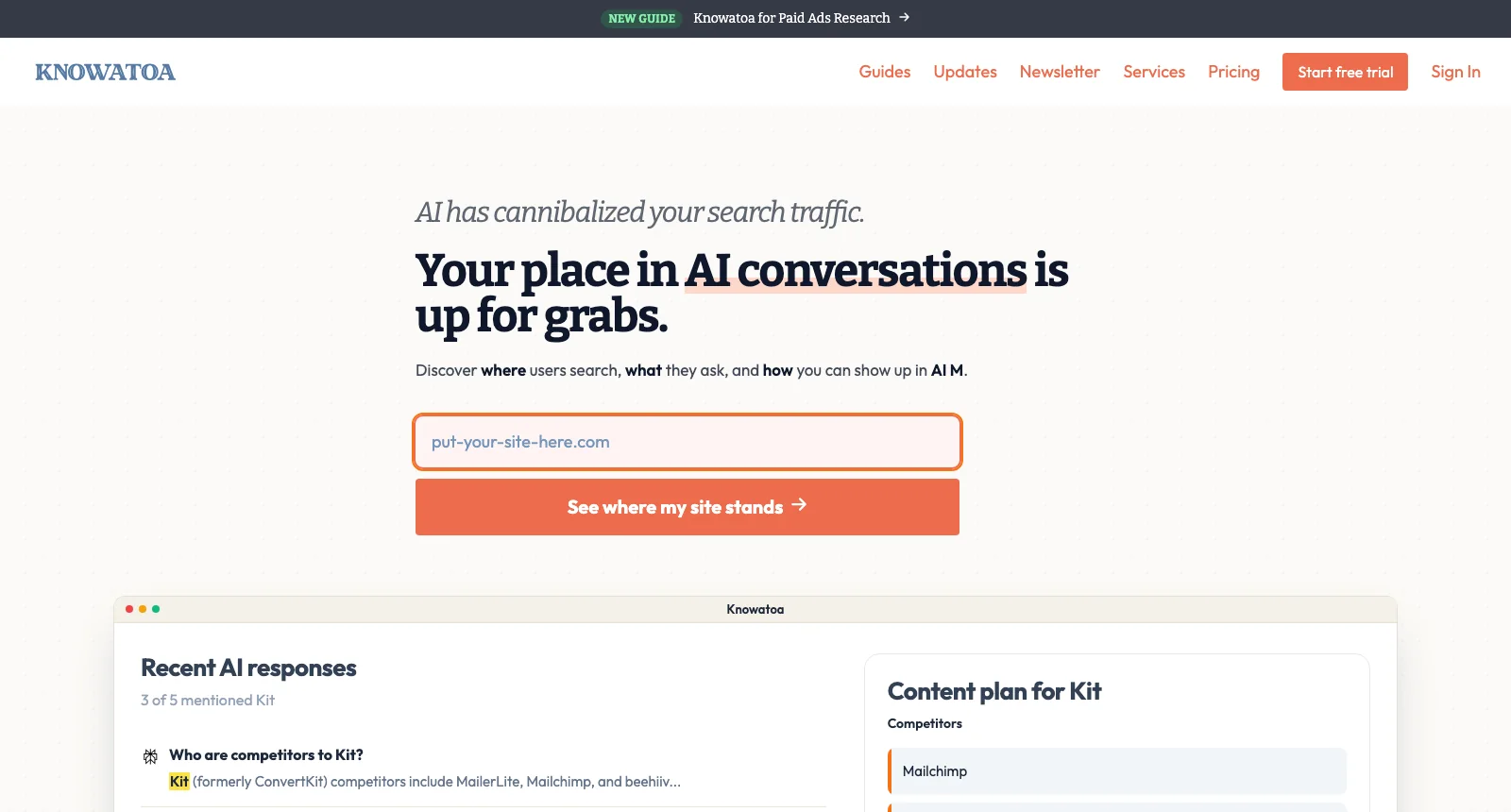
What the report contains: recent AI responses in your category and which of them named your brand, which is a more concrete framing than a bare score.
What I hit. The homepage site check redirects into /onboarding/create behind a Cloudflare verification, so the “free check” is the front of a signup flow. Pricing now starts at USD 59 a month with a trial, and the free ongoing tier it used to offer is gone.
Best for: a single qualitative read on how answers in your category are worded, if you are willing to sign up.
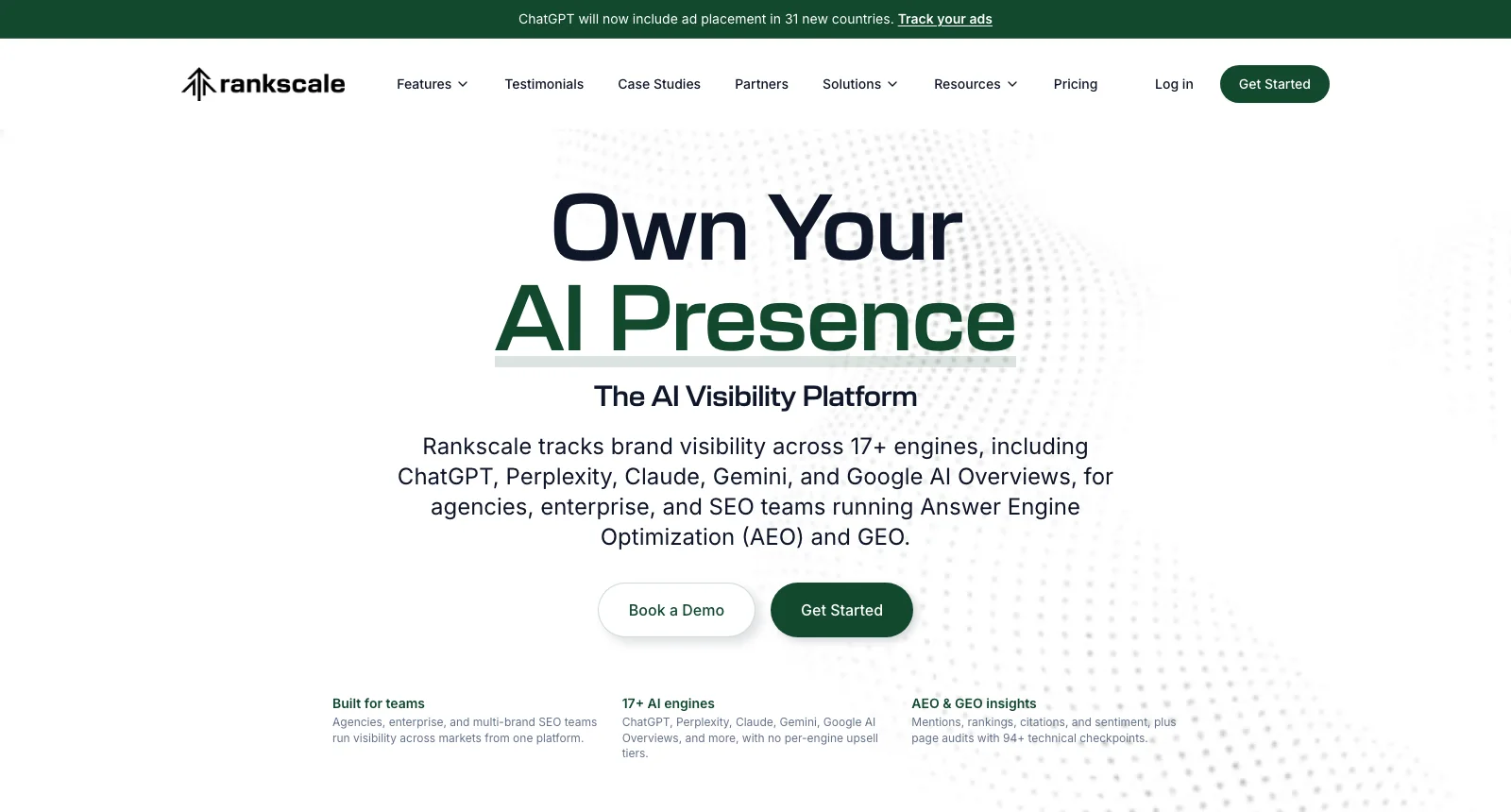
What the report contains: the widest engine coverage of anything here, 17 and up including Claude and Gemini, returning mentions, rankings, citations and sentiment, plus a page audit with technical checkpoints.
Where it stops: it is a paid platform first. The free audit is an entry point, not a permanent tier. Best for: one deep audit when you want breadth of engines before committing.
The AI visibility tool market turns over fast enough that a roundup goes stale in months. Three corrections from this September 2026 pass:
If a roundup does not say when it was last verified, assume at least one recommendation in it has died.
Of the AI visibility metrics a free report hands you, three matter, and the score at the top is the least useful of them.
One caution that applies to every report here: the engines are probabilistic. Run the same check three times across different days before concluding anything, and compare prompt sets before comparing scores.
No single free tool covers the ground. This is a 30-minute workflow that does.
Re-run steps 1 to 4 monthly and step 5 quarterly. If you want to understand exactly what these tools automate, run the same prompts by hand once.
Almost every free checker measures mentions and stops there. If the engines cannot read your site, the mention problem is downstream of a crawler problem, and no amount of content fixes it.
Generators for the first two are in the Am I Cited free tools, and the robots.txt one runs entirely in the browser with no account at all.
Free checkers are genuinely useful and this page is not a setup for a sales pitch. But they share one architecture: a prompt set someone else chose, run once, with no memory. That design answers “do I have a problem” well and “is what I am doing working” not at all. The Am I Cited report is no exception, which is why it says outright that nothing is saved.
You outgrow them at a predictable point: when you have started publishing against the gaps and need a before and after, when you are tracking more than roughly 30 prompts, or when you need to know within a day that a competitor has displaced you rather than within a month. For the full breakdown of what a snapshot leaves out, see the hidden limitations of free reports, and for what the paid tier costs and buys, the free versus paid comparison lays out the real prices.
Until then: run the stack above monthly, keep the record, and watch the cited-URL column more closely than any score.
Yasha is a talented software developer specializing in Python, Java, and machine learning. Yasha writes technical articles on AI, prompt engineering, and chatbot development.

Before you pay for anything, get the baseline. The free AI Brand Visibility Report scores your domain across ChatGPT, Gemini, Perplexity and DeepSeek, with the sentiment of every mention and the competitors named instead of you, in about a minute.
Compare 15 AI search visibility platforms by pricing, engine coverage, free plans, and ideal use case. See verified 2026 figures in this buyer’s matrix.
Compare free and paid AI visibility checkers by use case, plan limits, and verified 2026 pricing.

Discover the best AI visibility tools to monitor your brand across ChatGPT, Perplexity, Google AI Overviews, and other AI search engines. Compare features, pric...
Cookie Consent
We use cookies to enhance your browsing experience and analyze our traffic. See our privacy policy.